Upper Limb Conditions

Rotator Cuff–Related Shoulder Pain
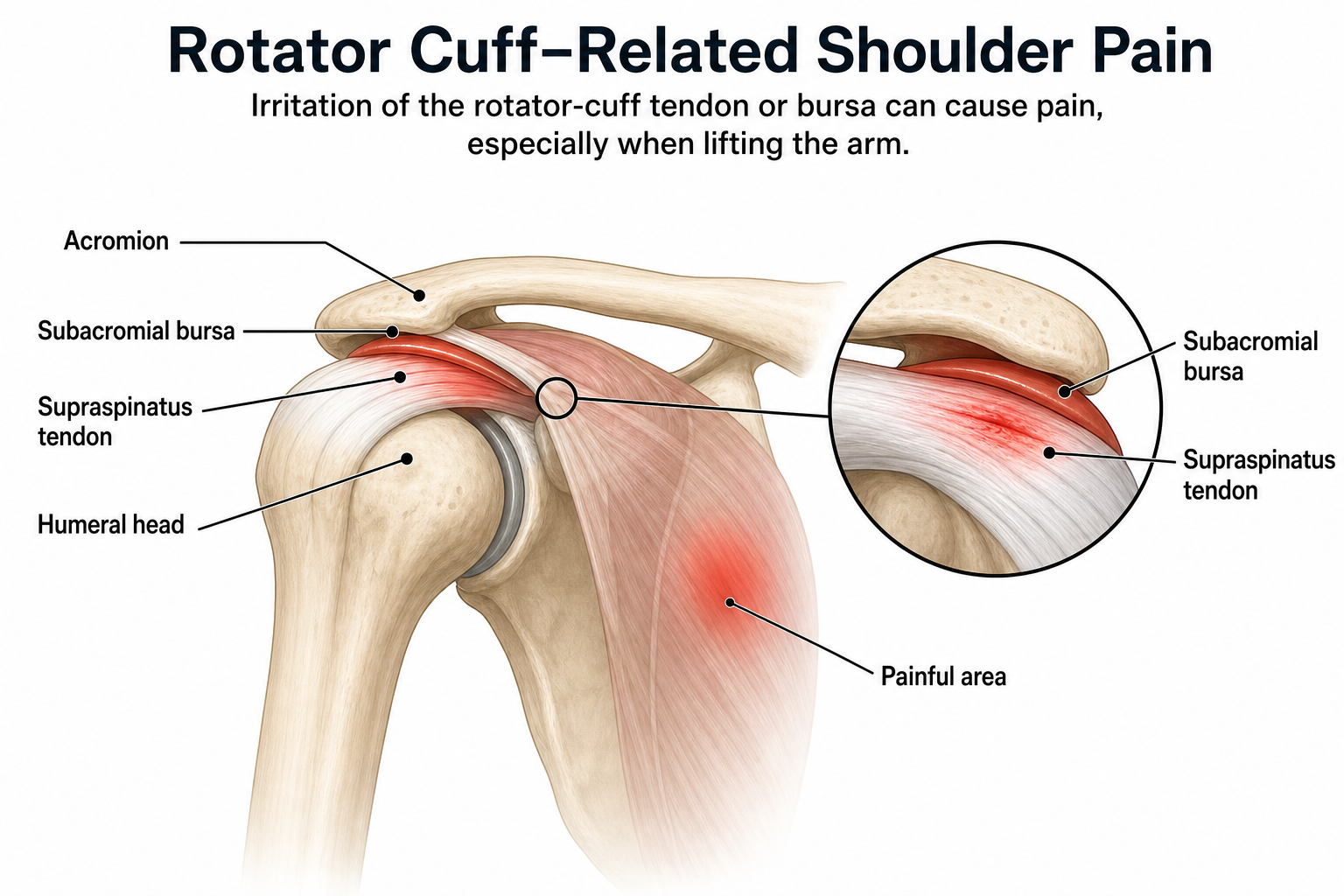
Rotator Cuff–Related Shoulder Pain

Definition

Rotator Cuff–Related Shoulder Pain is a general term for shoulder pain associated with the rotator cuff and surrounding tissues. It commonly causes pain or weakness during lifting, reaching, or overhead activities and can affect arm movement and daily activities.

Cause

Pain and functional limitation may develop when the rotator-cuff tendons and scapular-control system is repeatedly exposed to tension, compression, twisting, friction, or pressure beyond its capacity to adapt. Acute trauma, long-term repetitive use, or a sudden change in load can contribute.

Risk Factors

  • Rapid increases in lifting or overhead activity
  • Repetitive lifting work or sport
  • Insufficient shoulder or scapular strength
  • Previous shoulder pain

Common Symptoms

  • Pain with lifting or reaching
  • Pain when lying on the affected side
  • Worse pain with overhead activity or lifting
  • Reduced shoulder strength

Management

During the painful phase, temporarily reduce repeated overhead lifting and carrying loads far from the body while maintaining tolerable shoulder movement. Rehabilitation emphasises progressive rotator-cuff rotation, scapular-stabiliser training, and coordinated scapula–humerus movement during elevation. Sudden inability to lift the arm after trauma, marked weakness, or persistent night pain warrants medical assessment.

Prevention

Avoid sudden large increases in overhead training or throwing volume; progressively build rotator-cuff and scapular endurance, keep loads close to the body, and schedule brief breaks.
Calcific Tendinopathy of the Shoulder

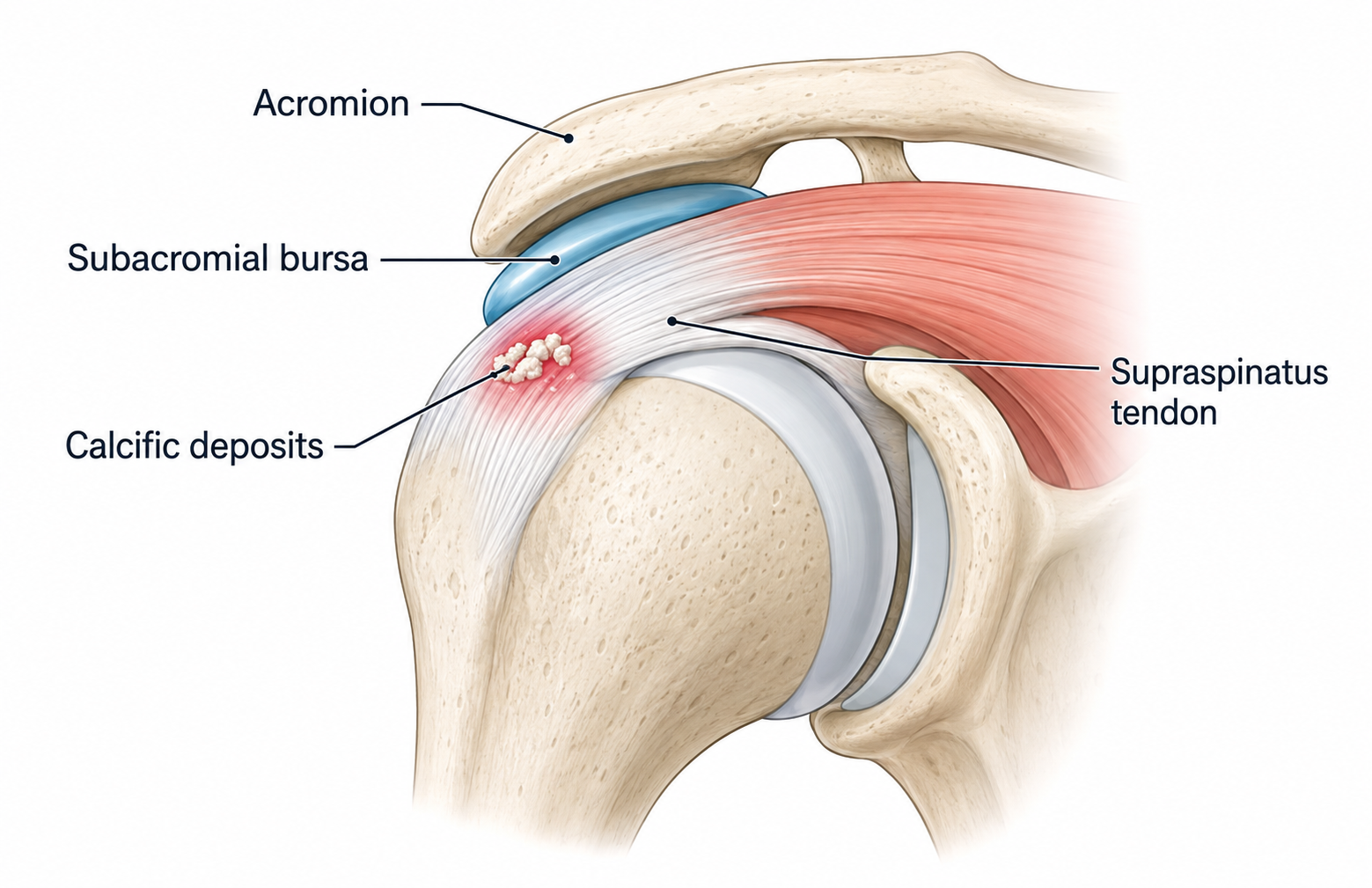
Calcific deposits within the supraspinatus tendon of the shoulder

Definition

Calcific Tendinopathy of the Shoulder is a condition in which calcium deposits form within the rotator cuff tendons, most commonly the supraspinatus tendon. Some deposits cause no symptoms, while symptomatic cases can cause shoulder pain and restricted movement.

Cause

The exact cause is not fully understood. The condition involves a biological process in which calcium deposits form within the tendon and may later be gradually reabsorbed by the body. Symptoms can change during different stages of this process, and the resorption stage can cause a sudden increase in pain and inflammation.

Risk Factors

  • Most commonly occurs in adults between approximately 30 and 60 years
  • Female sex
  • Diabetes
  • Thyroid disease or other endocrine and metabolic conditions

Common Symptoms

  • Shoulder pain that may develop gradually or become suddenly severe
  • Pain and difficulty when lifting or moving the arm
  • Night pain or difficulty lying on the affected shoulder
  • Reduced shoulder movement during painful episodes

Management

Physiotherapy focuses on maintaining comfortable shoulder movement and progressively restoring rotator cuff and shoulder strength, movement control, and function. During a highly painful phase, aggravating activities may be temporarily reduced before exercise is gradually reintroduced. Persistent or severe symptoms may require further medical assessment, with options such as extracorporeal shockwave therapy or image-guided lavage considered in selected cases.

Prevention

Calcific Tendinopathy cannot currently be reliably prevented because the process leading to calcium deposition is not fully understood. Maintaining general shoulder function and managing relevant health conditions can support overall musculoskeletal health, but these measures should not be presented as preventing calcium deposits from forming.

Adhesive Capsulitis (Frozen Shoulder)

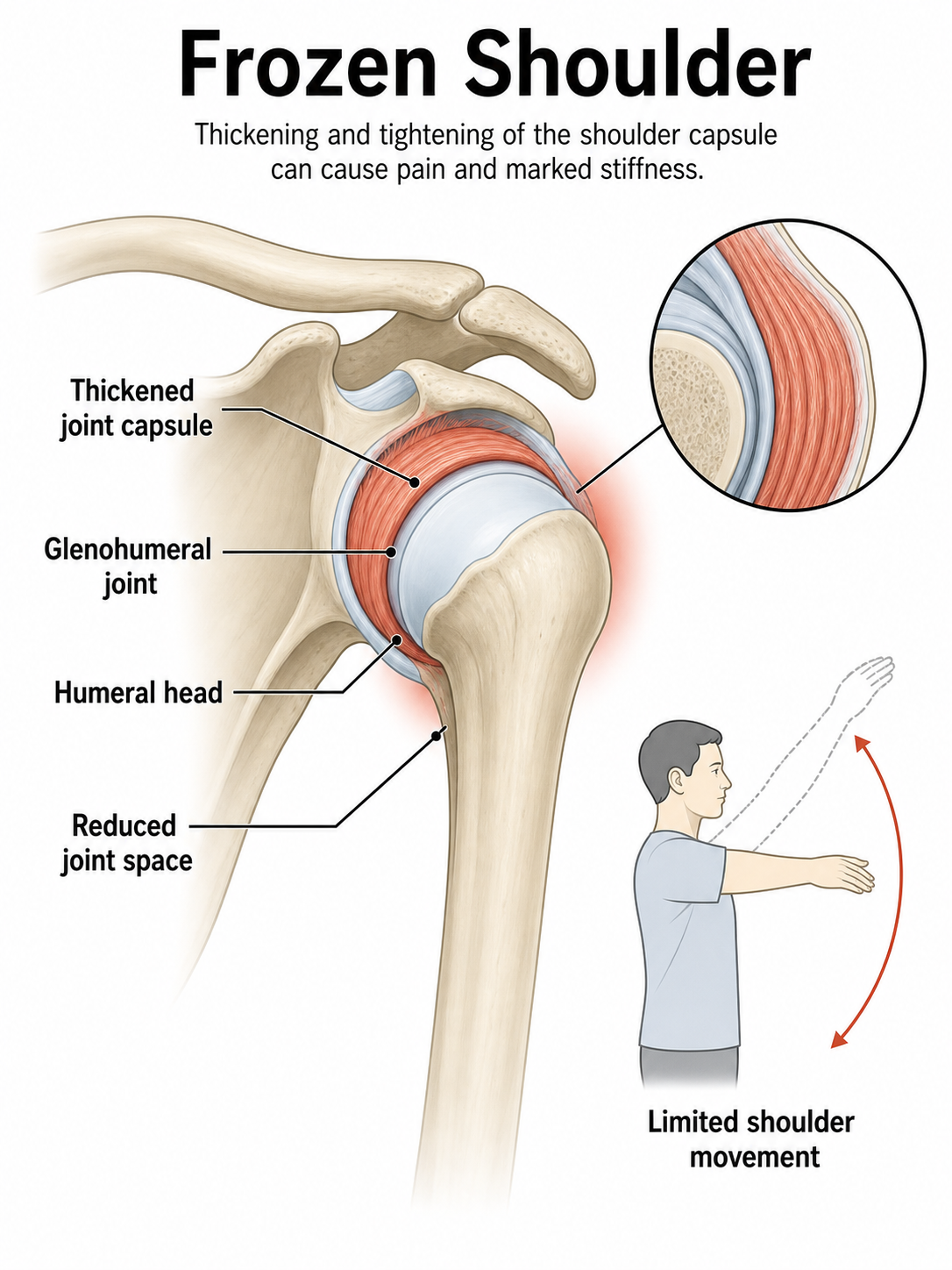
Adhesive Capsulitis (Frozen Shoulder)

Definition

Adhesive Capsulitis (Frozen Shoulder) is a condition in which the shoulder capsule gradually becomes stiff and tight. It mainly causes shoulder pain and a marked reduction in both active and passive movement, which can affect daily activities.

Cause

Adhesive capsulitis develops when the shoulder capsule becomes inflamed, thickened, and stiff, restricting shoulder movement. It can occur without an obvious trigger or following shoulder injury, surgery, or prolonged immobilisation. Diabetes and thyroid disease are recognised risk factors.

Risk Factors

  • Age 40–60 years
  • Diabetes or thyroid disease
  • Previous shoulder immobilisation
  • Previous shoulder trauma

Common Symptoms

  • Gradually worsening shoulder pain, often at night
  • Difficulty lifting, reaching behind, or rotating
  • Difficulty dressing or hair care
  • Marked loss of range of motion

Management

Management should follow the stage: when pain predominates, focus on pain control, sleep positioning, and gentle movement without forceful stretching; during stiffness, add capsular stretching, shoulder mobilisation, and home exercise; during recovery, progressively strengthen the rotator cuff and scapular muscles. People with diabetes or severe night pain should discuss further options with a doctor.

Prevention

Manage diabetes and thyroid disease appropriately. After shoulder injury or surgery, gradually restore movement when safe and avoid unnecessary prolonged complete immobilisation.

Shoulder Instability / Dislocation

Shoulder Instability / Dislocation

Definition

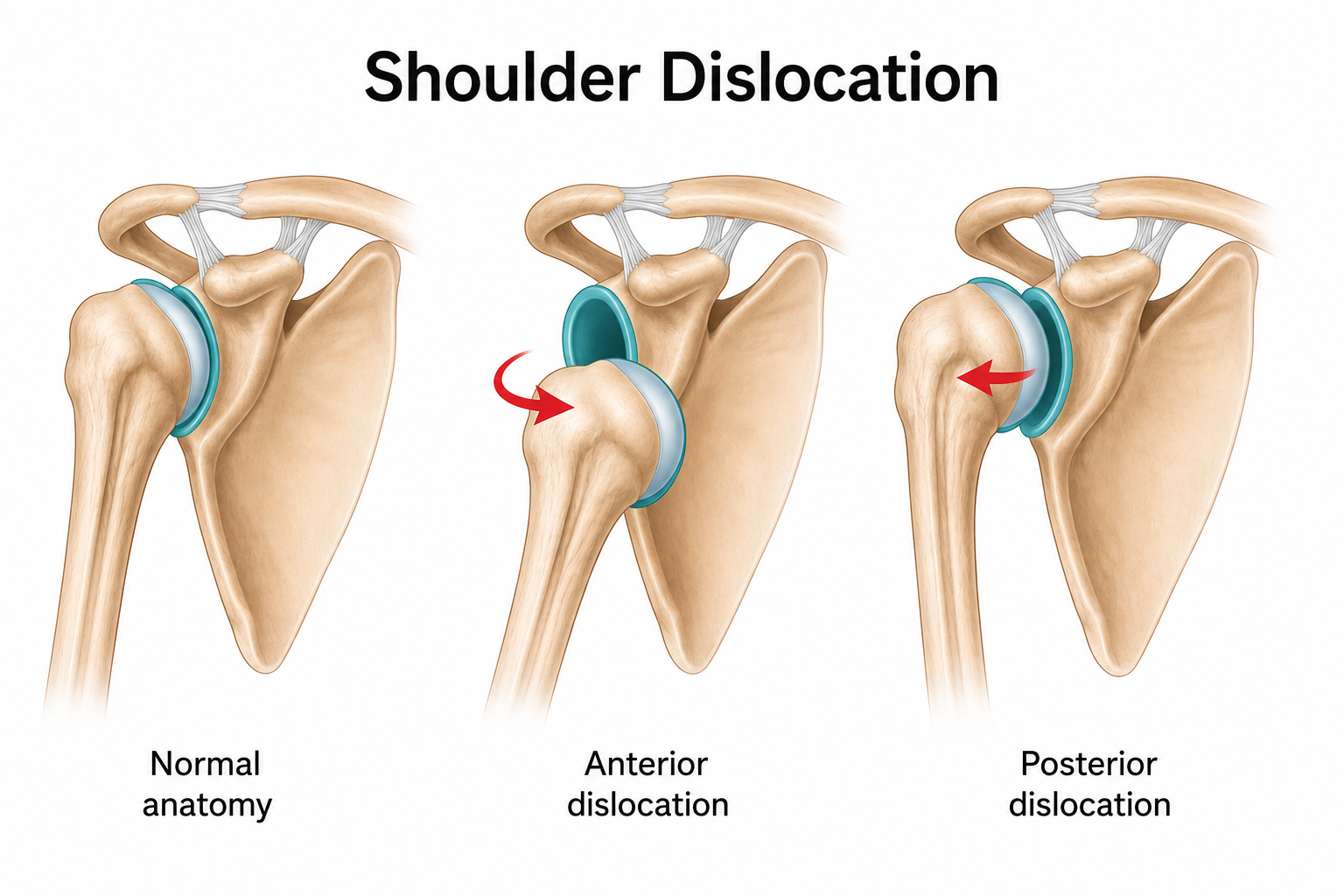
Shoulder instability occurs when the shoulder joint cannot maintain normal stability, causing a feeling that the shoulder is loose, slipping, or about to dislocate. A shoulder dislocation occurs when the upper arm bone moves out of the shoulder socket, causing pain, restricted movement, and possible injury to surrounding tissues.

Cause

Shoulder dislocation occurs when the upper arm bone moves out of the shoulder socket, usually following an injury. This can damage the tissues that support the shoulder joint. Shoulder instability can persist or recur after a dislocation and is also associated with excessive joint movement or reduced muscular control.

Risk Factors

  • Contact or overhead sport
  • Previous dislocation
  • Joint hypermobility
  • Repetitive overhead activity

Common Symptoms

  • A slipping or about-to-dislocate feeling
  • Pain and instability with movement
  • Apprehension at certain angles
  • Swelling and restriction after dislocation

Management

A first or suspected dislocation requires medical assessment; do not attempt self-reduction. After the protection phase, progressively restore motion and train rotator-cuff, scapular, and core stability, proprioception, closed-chain weight-bearing, and sport-specific positions. Recurrent dislocation, numbness, or vascular symptoms require orthopaedic assessment.

Prevention

Complete rotator-cuff, scapular, core, and dynamic-stability training before returning to contact or overhead sport, then progressively practise falling, throwing, or collision-related tasks.

AC Joint Disorder

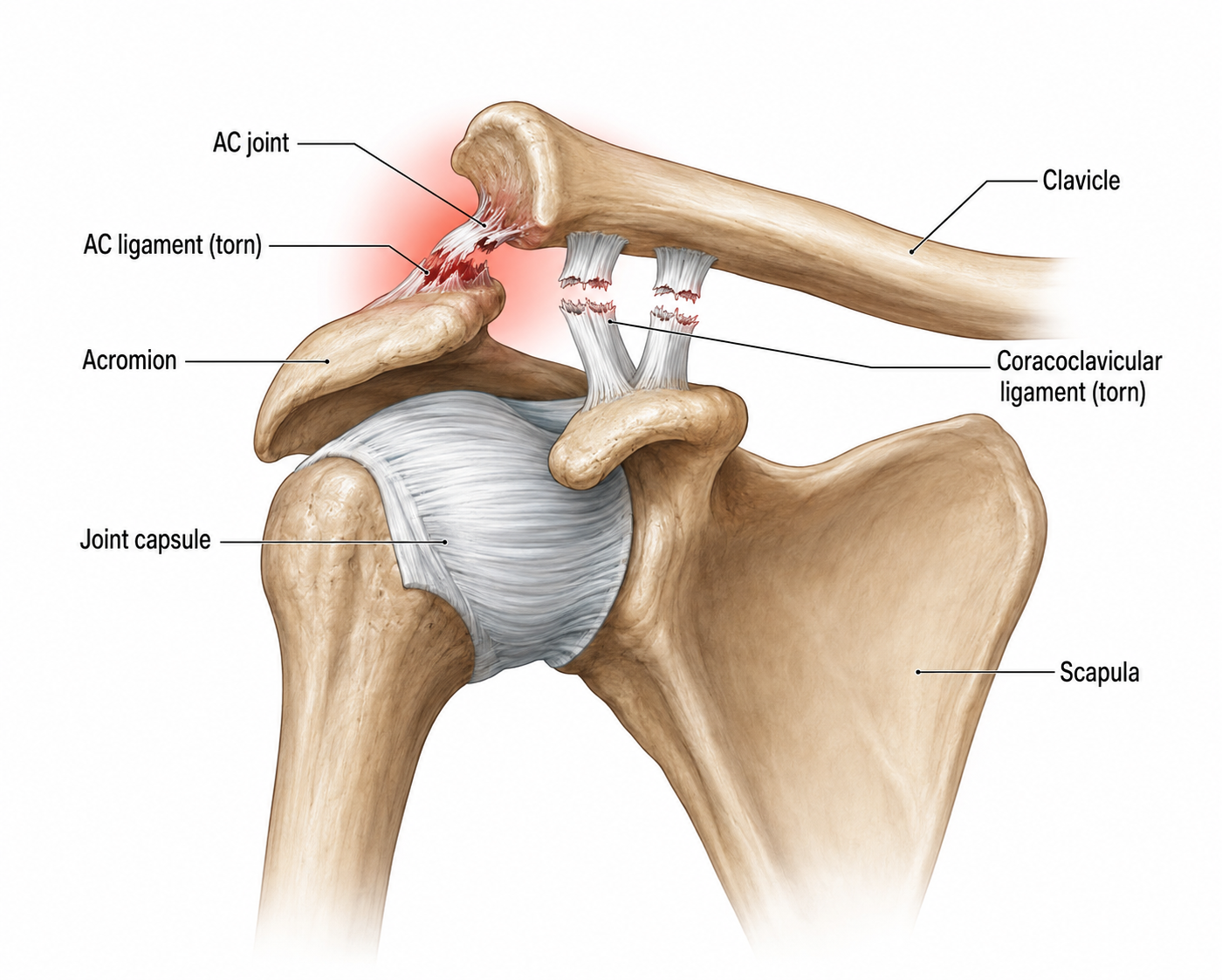
AC joint injury showing torn acromioclavicular and coracoclavicular ligaments

Definition

AC Joint Disorder affects the acromioclavicular joint at the top of the shoulder, where the collarbone meets the acromion at the top of the shoulder blade. It may involve a ligament sprain or joint separation after trauma, or irritation associated with repeated loading and degenerative joint changes.

Cause

An acute AC joint injury commonly occurs after a direct fall or impact onto the shoulder, which can stretch or tear the ligaments supporting the joint. AC joint pain can also develop gradually with degenerative joint changes or repeated activities that place high loads through the top of the shoulder.

Risk Factors

  • Previous AC joint injury
  • Contact sports or activities with a risk of falling onto the shoulder
  • Repeated high-load shoulder activities
  • Increasing age and degenerative AC joint changes

Common Symptoms

  • Localised pain and tenderness over the top of the shoulder
  • Pain when reaching overhead or across the chest
  • Pain during pressing, lifting, or lying on the affected shoulder
  • Swelling, bruising, or a visible bump after trauma

Management

Initially, adjust activities that clearly aggravate the AC joint while maintaining comfortable shoulder movement. Physiotherapy progressively restores shoulder mobility, strength, and control before gradually reintroducing lifting, pushing, carrying, or other required activities. Significant deformity after trauma, inability to use the arm, severe pain, or persistent functional limitation warrants medical assessment.

Prevention

Build tolerance to demanding shoulder activities progressively and allow adequate recovery when activity levels increase. After an AC joint injury, restore comfortable movement, strength, and function before returning fully to higher-demand activities.

SLAP Tear

SLAP Tear

Definition

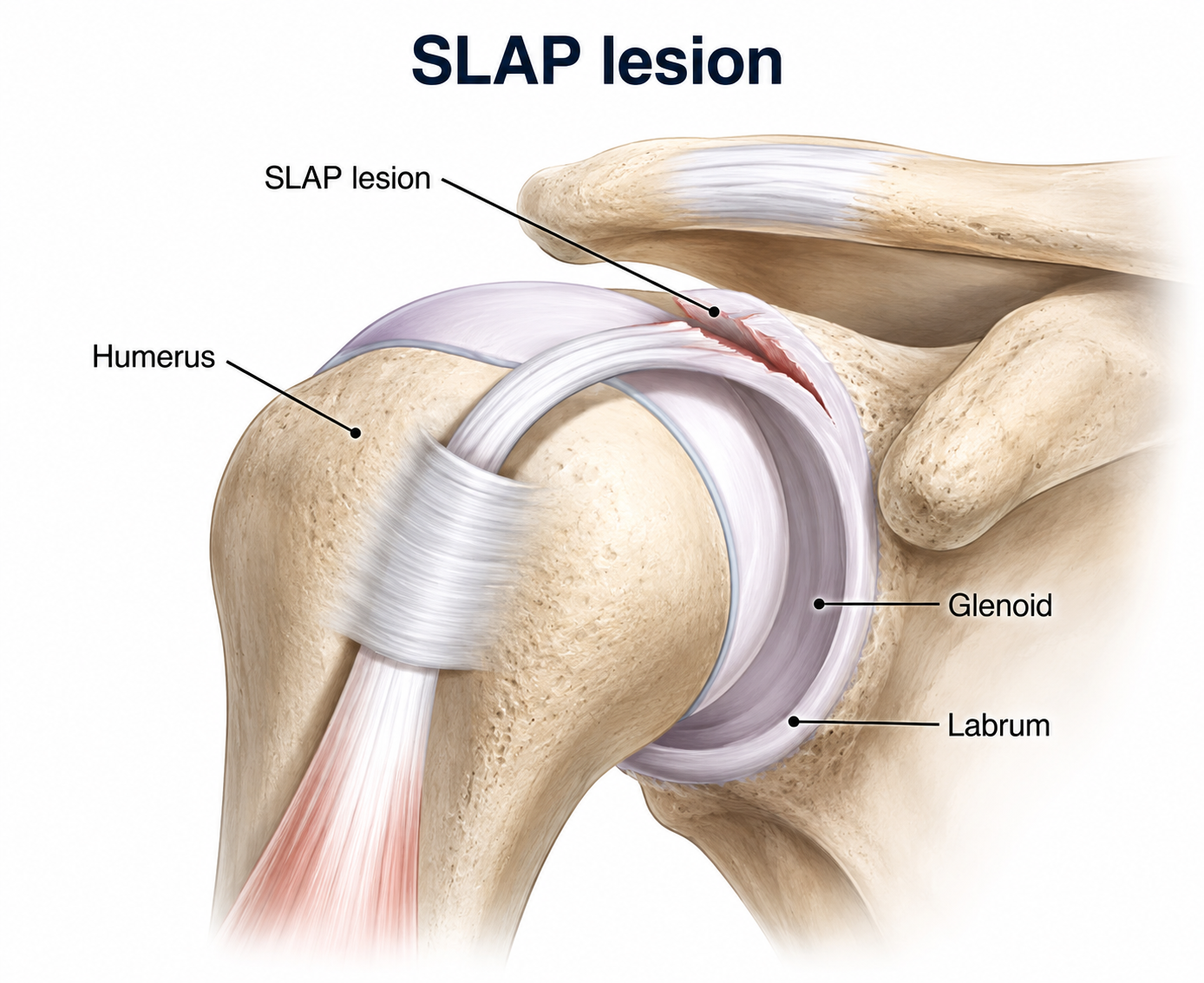
A SLAP Tear is a tear or injury involving the upper part of the cartilage rim around the shoulder joint. It can cause deep shoulder pain, catching or clicking, and may affect overhead activities and sporting performance.

Cause

A SLAP tear can occur following a fall onto the hand, sudden traction on the arm, or other shoulder trauma. It can also be associated with repeated shoulder loading and age-related tissue changes. Some labral changes do not cause symptoms.

Risk Factors

  • Repeated or high-load shoulder activities
  • Frequent overhead activities
  • Fall onto the hand or traction injury
  • Previous shoulder instability

Common Symptoms

  • Deep shoulder pain
  • Pain during certain shoulder movements
  • Catching or clicking
  • Reduced shoulder strength or function

Management

Initially, modify shoulder activities and loads that cause deep pain or catching. Rehabilitation can progressively improve shoulder mobility, scapular control, and rotator cuff strength before restoring higher-load activities according to the person's work, exercise, and daily needs. Persistent symptoms that significantly affect function warrant further assessment.

Prevention

Gradually increase shoulder activity and loading, maintain shoulder strength, mobility, and control, and avoid sudden large increases in demanding activity when fatigued or unprepared.

Subacromial Pain Syndrome

Subacromial Pain Syndrome

Definition

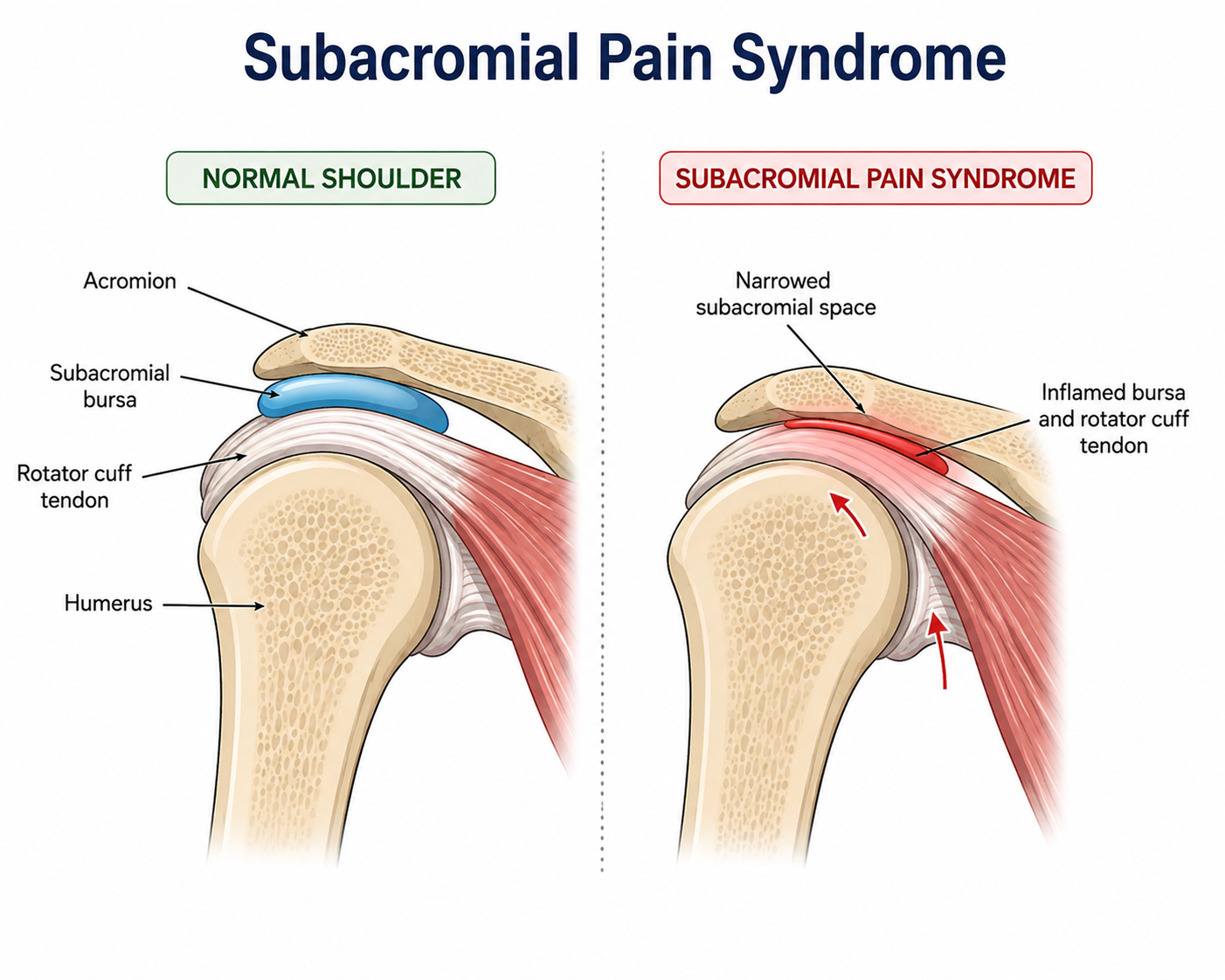
Subacromial Pain Syndrome is a common shoulder pain condition mainly associated with the rotator cuff and surrounding tissues. Pain commonly occurs when lifting or reaching with the arm or during overhead activities and may be accompanied by shoulder weakness.

Cause

Subacromial pain syndrome is influenced by multiple factors, including the capacity of the shoulder muscles and surrounding tissues, shoulder strength and movement, and changes in activity or training load. Repeated or suddenly increased overhead activity can contribute to symptoms.

Risk Factors

  • Overhead sport
  • Repetitive lifting work
  • Sudden training increases
  • Shoulder weakness

Common Symptoms

  • Outer or front shoulder pain
  • Pain during midrange elevation
  • Discomfort reaching high objects
  • Shoulder weakness

Management

Modify lifting volume and elevation angle during the pain-sensitive phase rather than completely avoiding shoulder use. Treatment uses progressive rotator-cuff and scapular resistance training, thoracic mobility, and elevation mechanics; build strength at lower angles before returning overhead.

Prevention

Avoid sudden increases in repetitive overhead workload; improve tolerance through rotator-cuff, scapular, and thoracic training and use appropriately raised tools to reduce prolonged overhead posture.

Lateral Epicondylalgia (Tennis Elbow)

Lateral Epicondylalgia (Tennis Elbow)

Definition

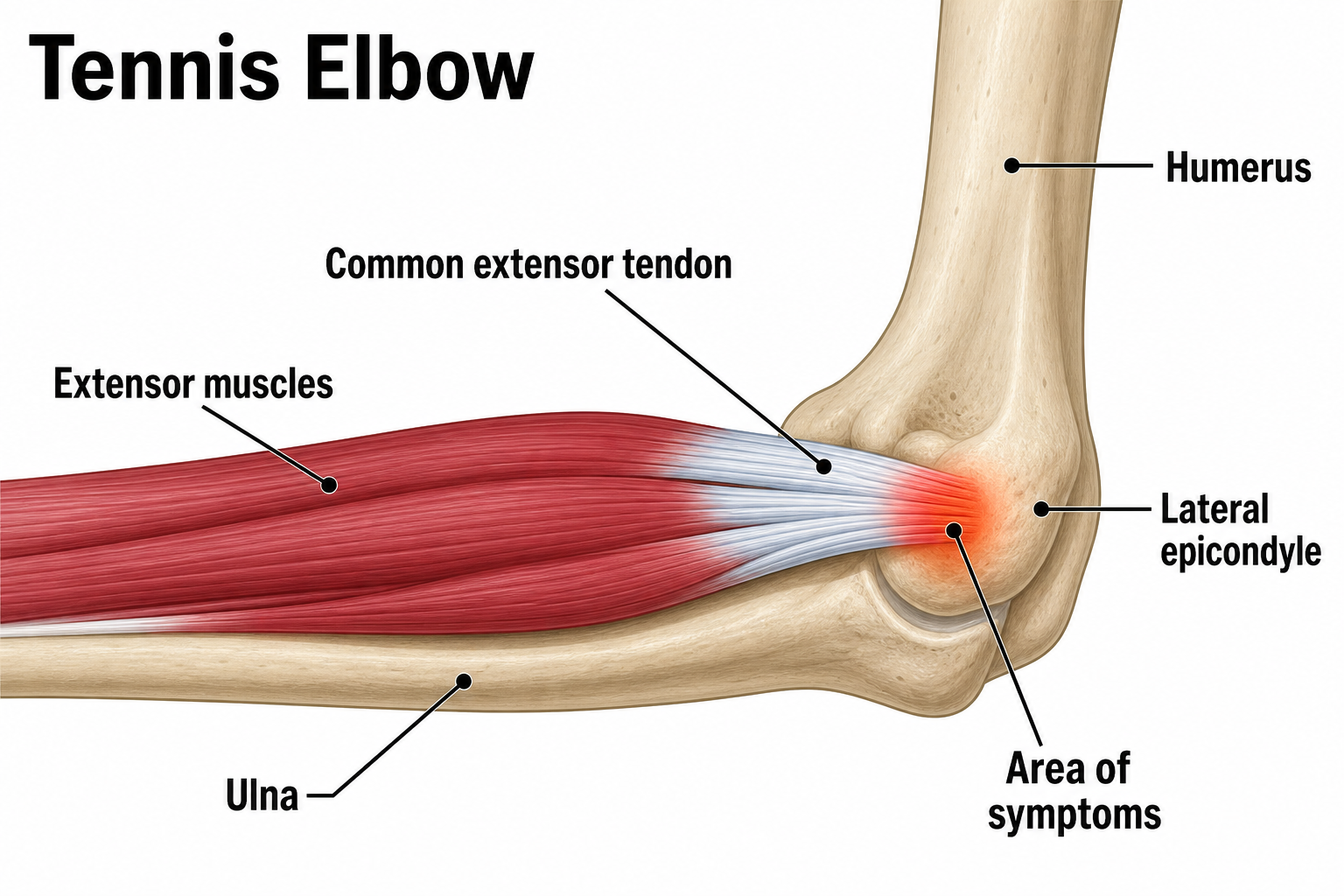
Tennis Elbow is a tendon-related condition causing pain around the outer side of the elbow. Symptoms are often noticeable when gripping objects, lifting with the arm, or using the wrist against resistance, and grip strength may be reduced.

Cause

Tennis Elbow develops when the tendons around the outer elbow have difficulty adapting to the demands placed on them. Repetitive hand and wrist tasks, forceful gripping, or a rapid change in the amount or intensity of activity can contribute to symptoms.

Risk Factors

  • Frequent gripping or repetitive hand tasks
  • Repeated use of the wrist against resistance
  • Rapid changes in activity demands
  • Reduced forearm conditioning

Common Symptoms

  • Outer-elbow tenderness
  • Pain with gripping or twisting a towel
  • Pain lifting a cup or object
  • Forearm fatigue or reduced grip

Management

Initially, identify and adjust tasks that consistently provoke outer-elbow pain rather than stopping all arm activity. Rehabilitation focuses on gradually improving the capacity of the wrist extensor muscles, grip function, and control of the upper limb so that everyday and higher-demand activities can be resumed comfortably.

Prevention

Maintain adequate forearm conditioning for regular hand and wrist demands. When starting a new task or increasing activity, allow enough time for the elbow to adapt and vary repetitive tasks where practical.

Medial Epicondylalgia (Golfer’s elbow)

Medial Epicondylalgia (Golfer’s elbow)

Definition

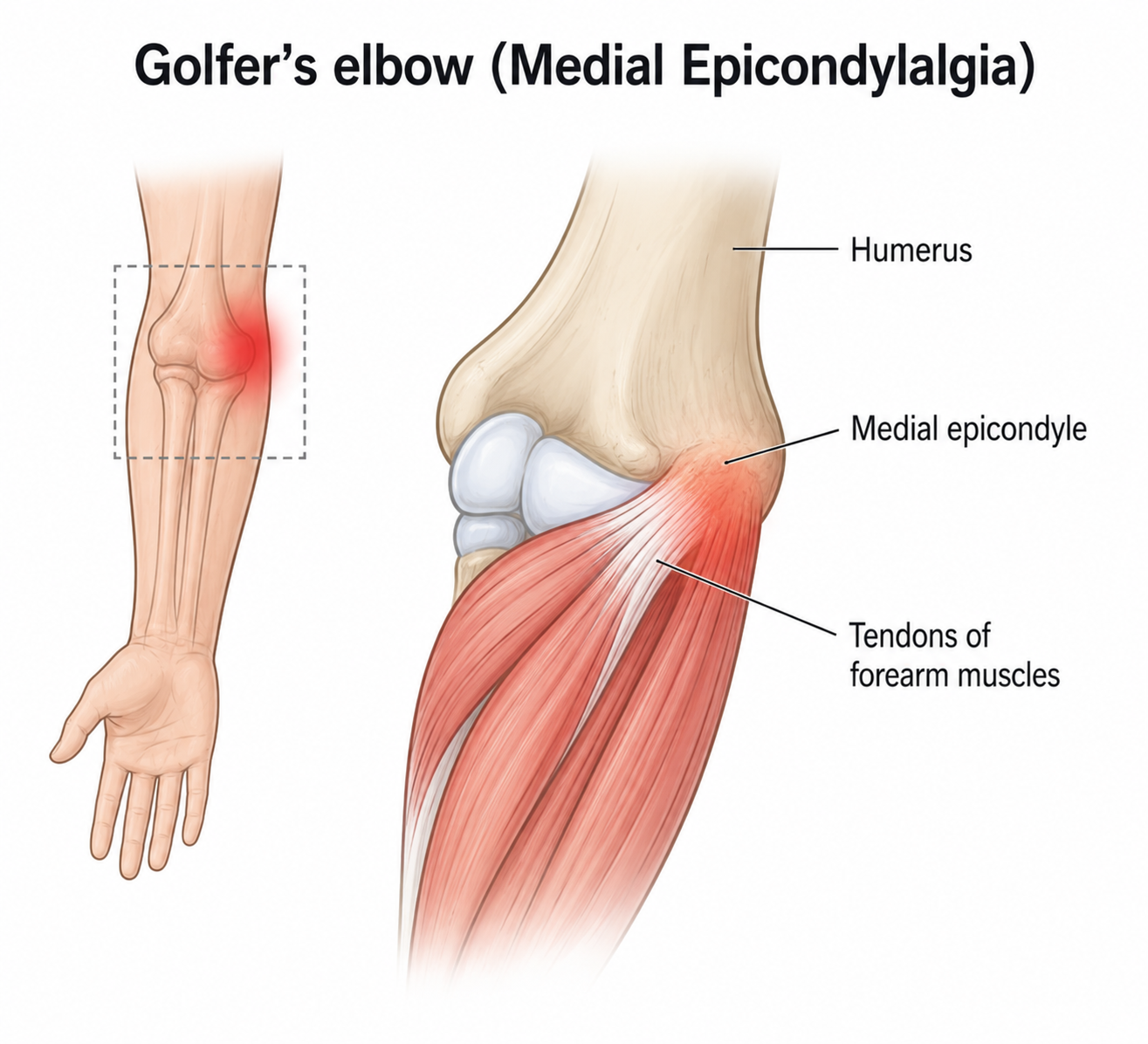
Golfer's Elbow affects the tendons around the inner side of the elbow. It can cause local tenderness and discomfort when the hand, wrist, or forearm is used forcefully, sometimes making heavier everyday tasks more difficult.

Cause

Symptoms can develop when the muscles and tendons attached to the inner elbow are repeatedly required to produce or control force without sufficient recovery. A noticeable change in workload, exercise, or other demanding upper-limb activity can also contribute.

Risk Factors

  • Repeated forceful use of the hand or forearm
  • Tasks requiring sustained wrist effort
  • Limited recovery between demanding activities
  • Reduced forearm strength or capacity

Common Symptoms

  • Inner-elbow tenderness
  • Pain with gripping or wrist force
  • Discomfort with throwing or swinging
  • Reduced forearm strength

Management

Management begins by modifying activities that repeatedly irritate the inner elbow while keeping the arm moving within a comfortable range. Rehabilitation then develops the strength and control of the forearm and wrist, with exercises progressed according to the patient's symptoms and functional needs. Increasing hand weakness or numbness in the little finger should be assessed for possible nerve involvement.

Prevention

Give the forearm sufficient recovery after demanding activity and maintain the strength needed for regular tasks. Changes in workload or exercise should be introduced progressively rather than making large increases over a short period.

Cubital Tunnel Syndrome

Cubital Tunnel Syndrome

Definition

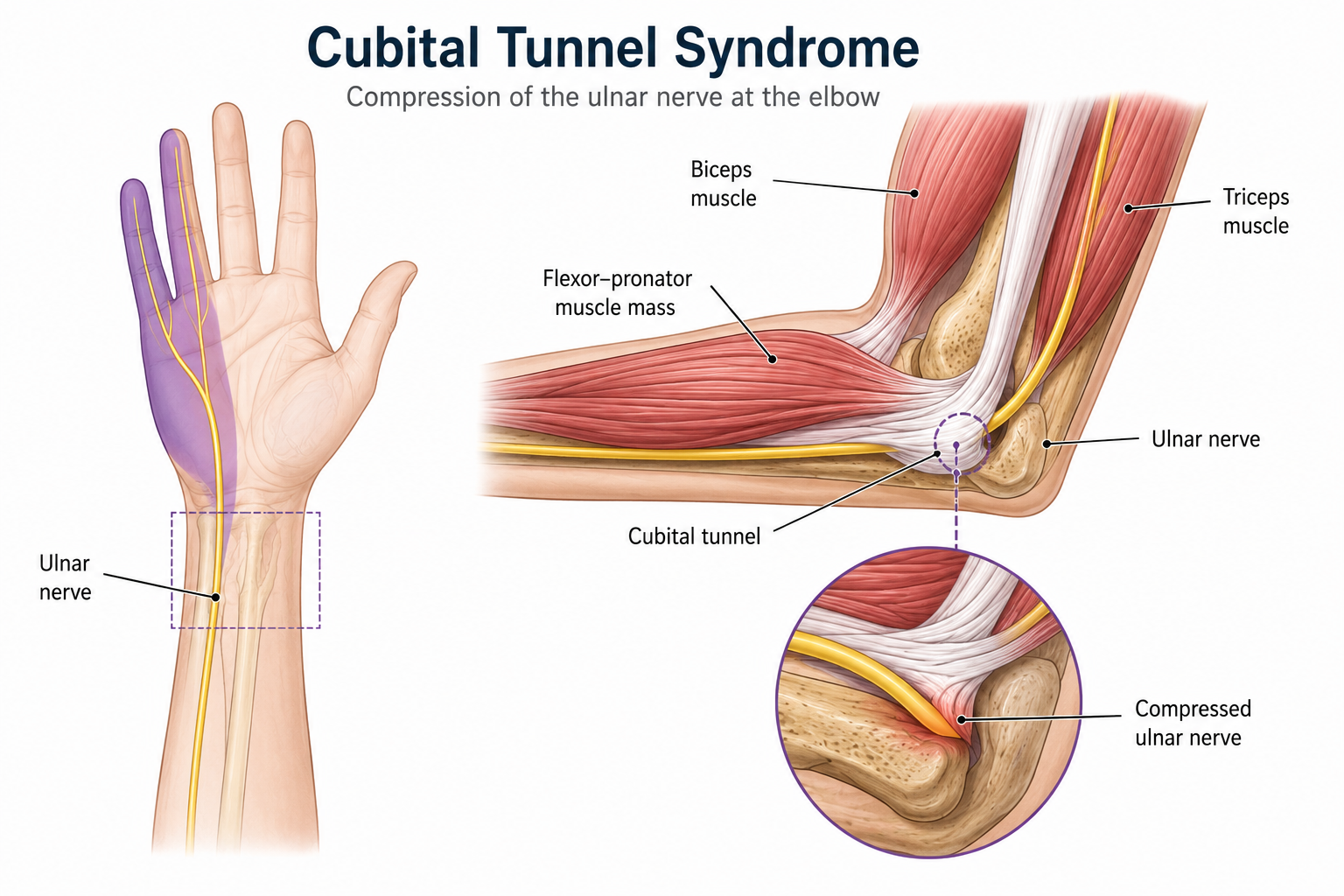
Cubital Tunnel Syndrome occurs when a nerve on the inner side of the elbow becomes compressed or irritated. This can cause numbness, tingling, or weakness in the hand and can affect grip, fine hand movements, and daily activities.

Cause

Cubital Tunnel Syndrome is mainly caused by compression or irritation of the ulnar nerve around the inner side of the elbow. Prolonged elbow bending, direct pressure on the elbow, or repeated elbow movement can increase compression or irritation of the nerve.

Risk Factors

  • Prolonged elbow flexion
  • Direct pressure on the elbow
  • Repetitive elbow movement
  • Previous elbow trauma

Common Symptoms

  • Numbness or tingling in the little finger and the nearby side of the ring finger
  • Worse symptoms with elbow flexion
  • Hand weakness
  • Difficulty with fine tasks

Management

Reduce ulnar-nerve compression and excessive tension by avoiding prolonged elbow flexion, leaning on the elbow, and deep elbow flexion during sleep; a protective pad or night splint may help. Physiotherapy can teach nerve gliding, posture, and workplace modifications. Persistent numbness, intrinsic-hand wasting, or worsening fine motor control needs prompt medical review.

Prevention

Avoid hard desk edges and sustained elbow flexion while driving or using a phone; use desk padding and avoid sleeping on or deeply flexing the affected elbow.

De Quervain's Tenosynovitis

De Quervain's Tenosynovitis

Definition

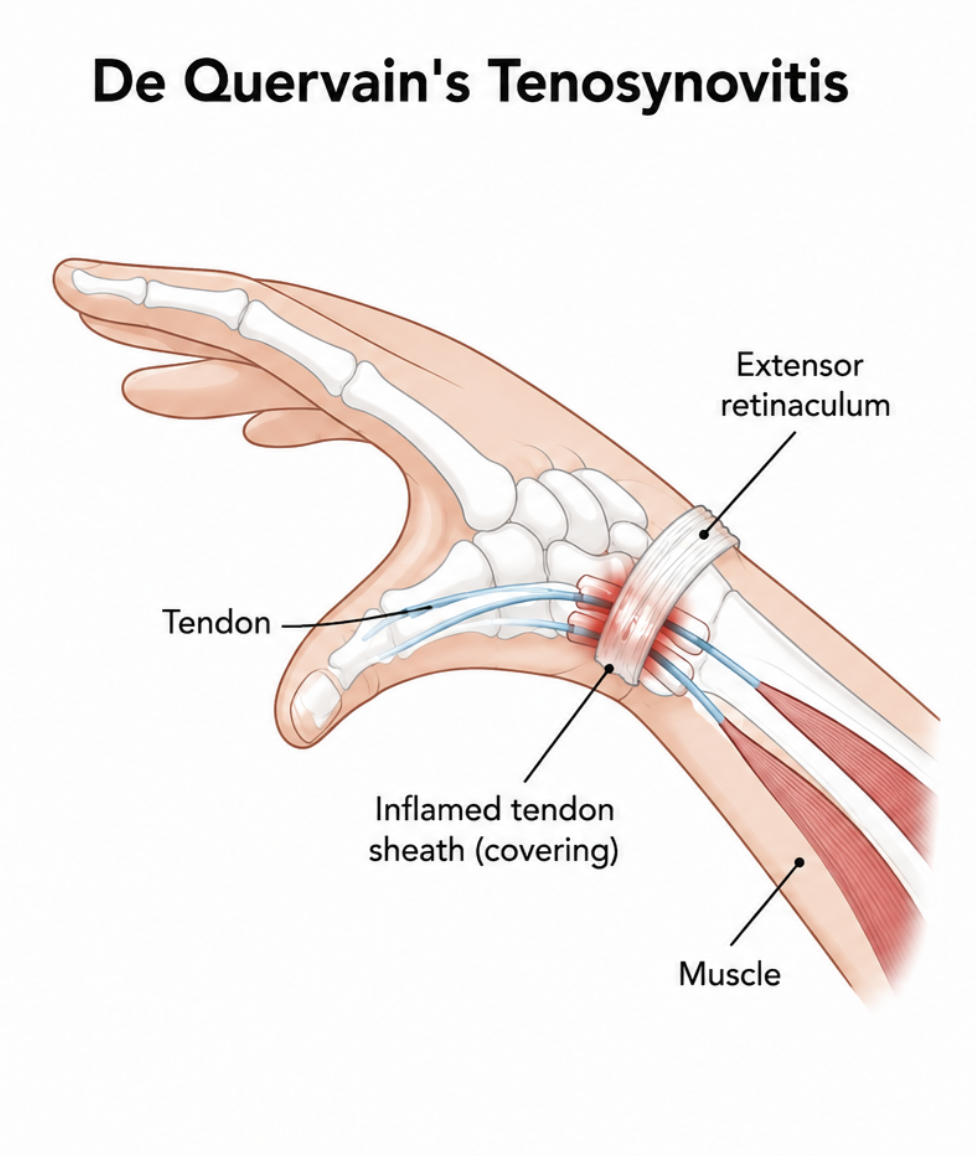
De Quervain's Tenosynovitis is a painful condition affecting two tendons that control thumb movement as they pass along the thumb side of the wrist. Irritation and thickening around these tendons can make thumb and wrist movements painful.

Cause

De Quervain's Tenosynovitis is associated with thickening around the tendons and tendon sheath on the thumb side of the wrist, which can restrict smooth tendon movement. Repeated or increased use of the thumb and wrist can increase tendon load and aggravate symptoms.

Risk Factors

  • Repetitive thumb use
  • Repeated or higher-load wrist and thumb activities
  • Frequent gripping, lifting, or twisting
  • Sudden increases in hand or wrist activity

Common Symptoms

  • Thumb-side wrist pain
  • Local swelling or tenderness
  • Pain with twisting or gripping
  • Restricted thumb movement

Management

Initially, reduce or modify activities that repeatedly aggravate the thumb and wrist. As symptoms settle, gradually restore thumb and wrist movement, followed by progressive thumb and grip strengthening and improved use of the wrist and thumb during daily activities. Persistent or severe symptoms warrant medical assessment.

Prevention

Avoid sudden increases in repetitive or forceful thumb and wrist activities. Where possible, modify gripping, lifting, or twisting tasks, distribute loads between both hands, and allow adequate recovery during repeated hand activities.

Trigger Finger

Trigger Finger

Definition

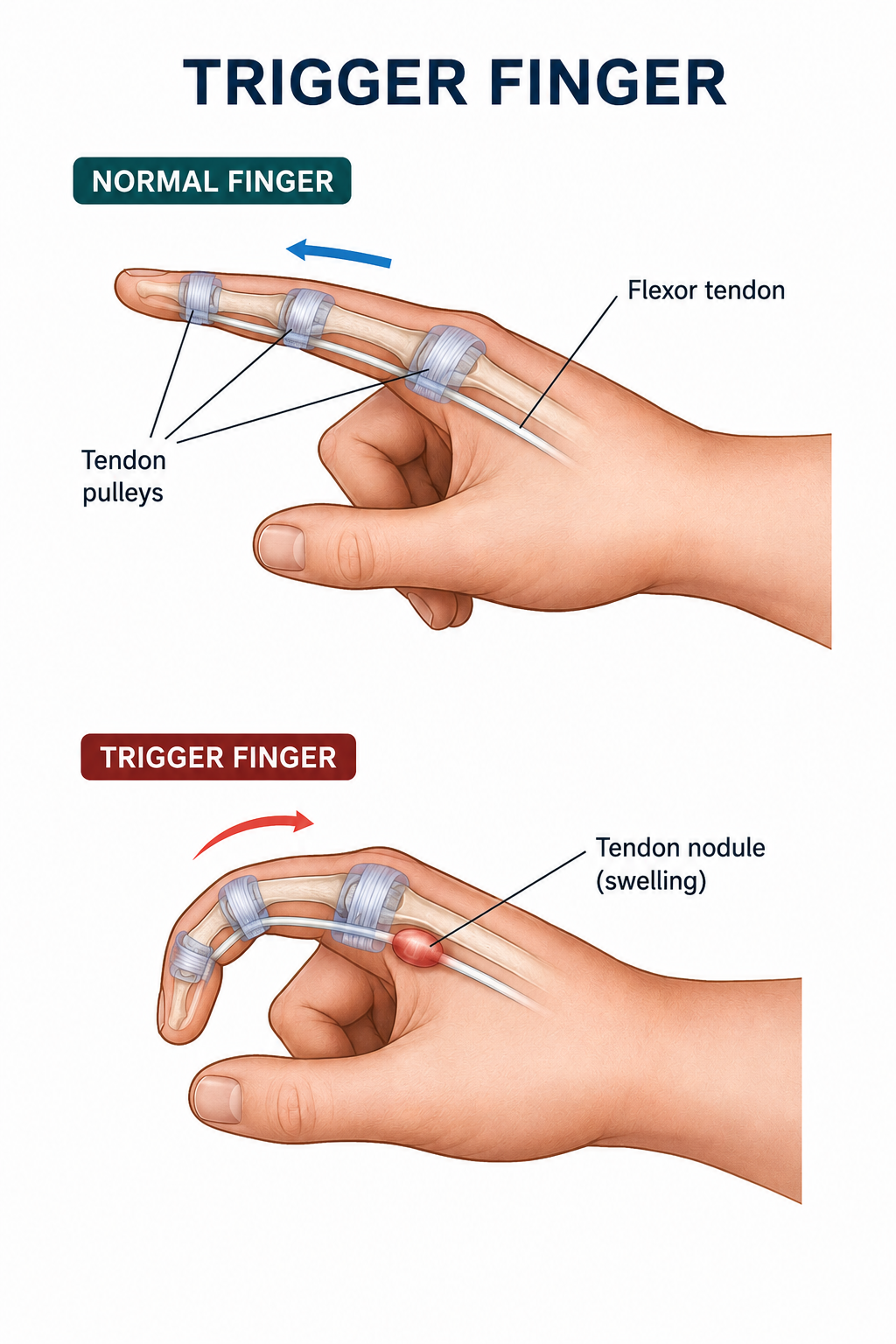
Trigger Finger occurs when a finger flexor tendon cannot glide smoothly through its tendon pulley, usually at the A1 pulley near the base of the finger. This causes pain, clicking, catching, or locking during movement.

Cause

Thickening of the flexor tendon and narrowing around the A1 pulley restrict smooth tendon movement, producing catching or locking. Diabetes and certain inflammatory conditions increase the risk, while repetitive or forceful gripping can aggravate symptoms.

Risk Factors

  • Repetitive gripping work
  • Diabetes
  • Hand overuse
  • Previous hand inflammation or trauma

Common Symptoms

  • Finger catching or clicking
  • Pain at the palm-side finger base
  • Morning stiffness
  • Difficulty fully straightening

Management

Reduce repetitive forceful gripping and movements that cause catching while maintaining finger glide within tolerance. Tendon-gliding exercise, improved hand-use technique, and splinting may reduce locking. A finger fixed in flexion, frequent locking, or no improvement with conservative care warrants medical or hand-surgery review.

Prevention

Avoid prolonged gripping of heavy tools or repeated forceful squeezing; use larger handles or distribute gripping force and include finger-extension breaks. Good blood-glucose control is important in diabetes.

Carpal Tunnel Syndrome

Carpal Tunnel Syndrome

Definition

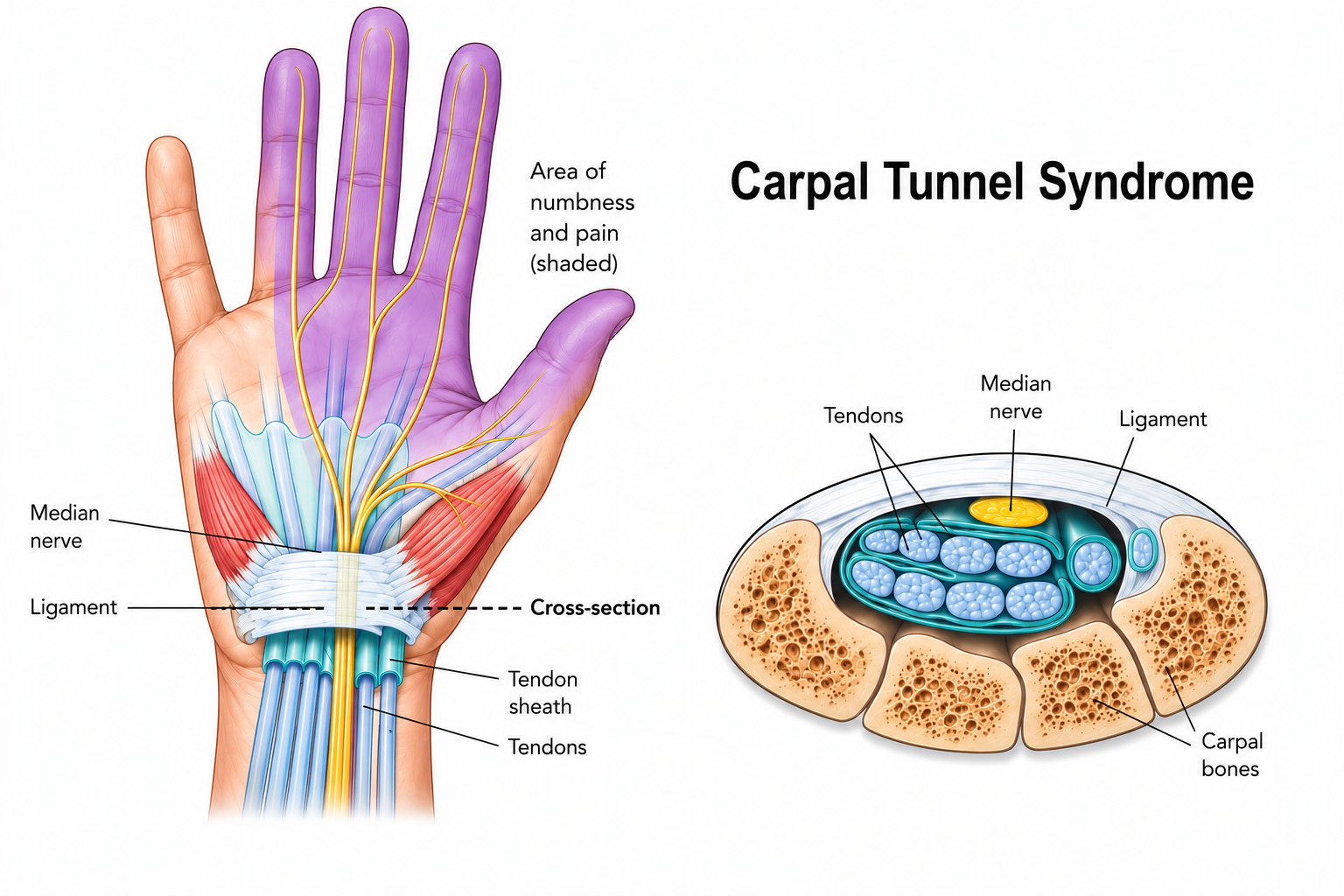
Carpal Tunnel Syndrome is a nerve condition caused by compression of the median nerve within the carpal tunnel at the wrist. It can cause numbness, tingling, or weakness in the hand and affect hand function and daily activities.

Cause

Carpal tunnel syndrome develops when the median nerve is compressed within the carpal tunnel at the wrist. Increased pressure within the tunnel affects nerve function and causes symptoms such as numbness, tingling, and weakness. Contributing factors include swelling, pregnancy, diabetes, thyroid disease, and previous wrist injury.

Risk Factors

  • Repetitive wrist and finger use
  • Diabetes or thyroid problems
  • Pregnancy or swelling
  • Previous wrist trauma

Common Symptoms

  • Numbness or tingling in the thumb, index finger, middle finger, and part of the ring finger
  • Worse at night or early morning
  • Reduced grip
  • Hand clumsiness

Management

Management focuses on reducing pressure within the carpal tunnel by avoiding prolonged excessive wrist bending or extension and modifying keyboard, mouse, tool, and daily activity use where appropriate. Physiotherapy can include nerve and tendon gliding, activity modification, and relevant exercises. Thenar muscle wasting, persistent numbness, or worsening hand function warrants medical assessment.

Prevention

Keep the wrist close to neutral during computer and tool work, avoid prolonged forceful gripping and vibrating tools, schedule wrist-movement breaks, and optimise working height.

TFCC Injury

TFCC Injury

Definition

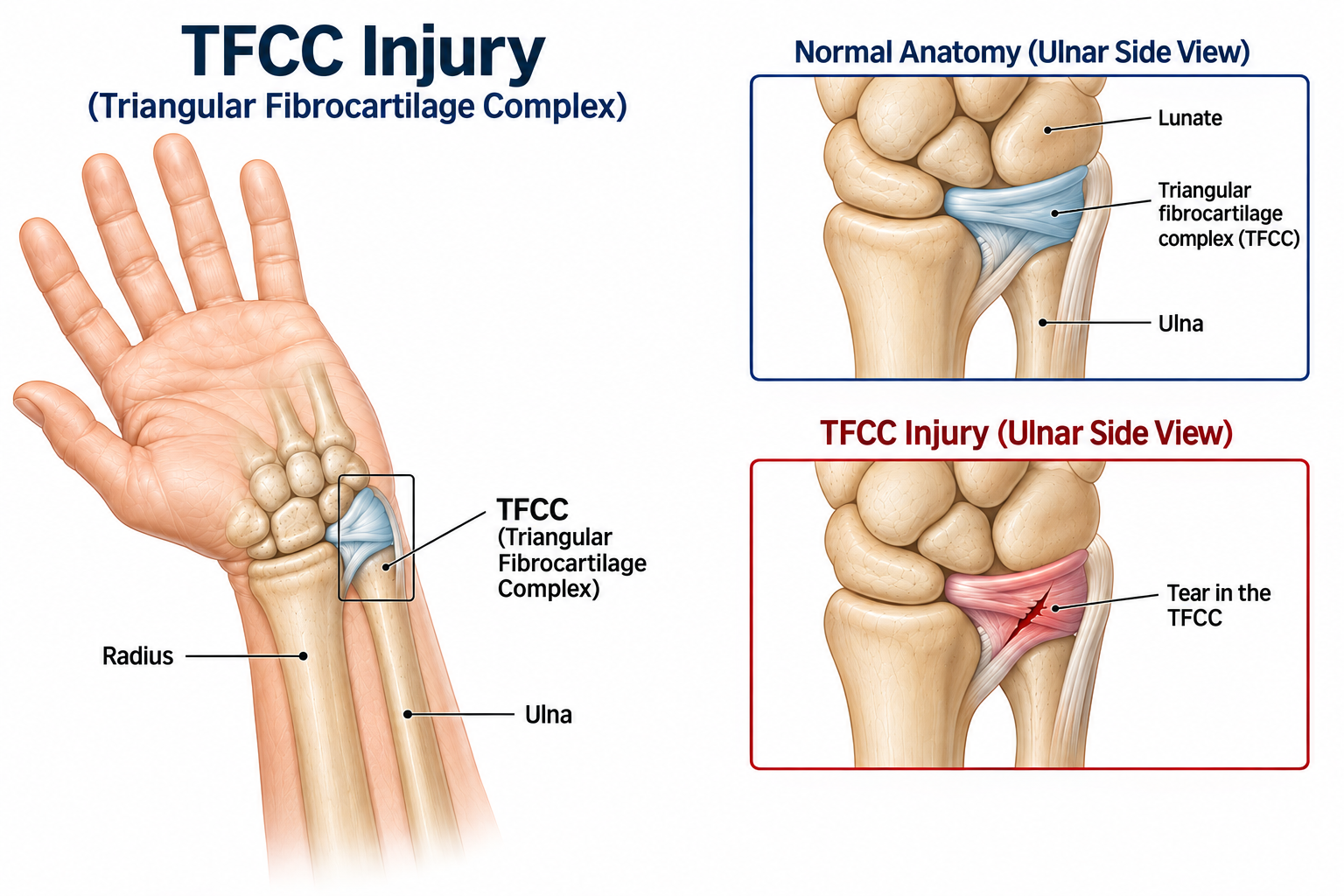
A TFCC Injury affects a group of cartilage and ligament structures on the little-finger side of the wrist. These structures help support and stabilise the wrist and allow forces to be transferred safely through the joint.

Cause

TFCC injuries can occur after trauma, such as falling onto the hand or forcefully twisting the wrist. They can also develop gradually through age-related changes and repeated loading. Symptoms vary depending on the location and severity of the injury.

Risk Factors

  • Fall onto the hand
  • Repeated forearm rotation
  • Weight-bearing wrist sport
  • Previous ulnar-sided trauma

Common Symptoms

  • Little-finger-side wrist pain
  • Worse with forearm rotation
  • Pain with weight-bearing
  • Clicking or weakness

Management

During the acute phase, temporarily reduce activities that aggravate symptoms, such as weight-bearing through the palm, heavy lifting, moving the wrist towards the little-finger side, and repeated forearm rotation. Rehabilitation gradually restores wrist and forearm movement before progressing grip strength, rotational control, and weight-bearing. Persistent catching, significant wrist instability, or severe post-traumatic pain warrants further assessment.

Prevention

Avoid bracing a fall with a fully extended wrist. Progress wrist-loading activity gradually and maintain forearm rotation, grip, and scapular control. Keep the wrist near neutral when using racquets, barbells, or tools.

Thumb CMC Osteoarthritis

Thumb CMC Osteoarthritis

Definition

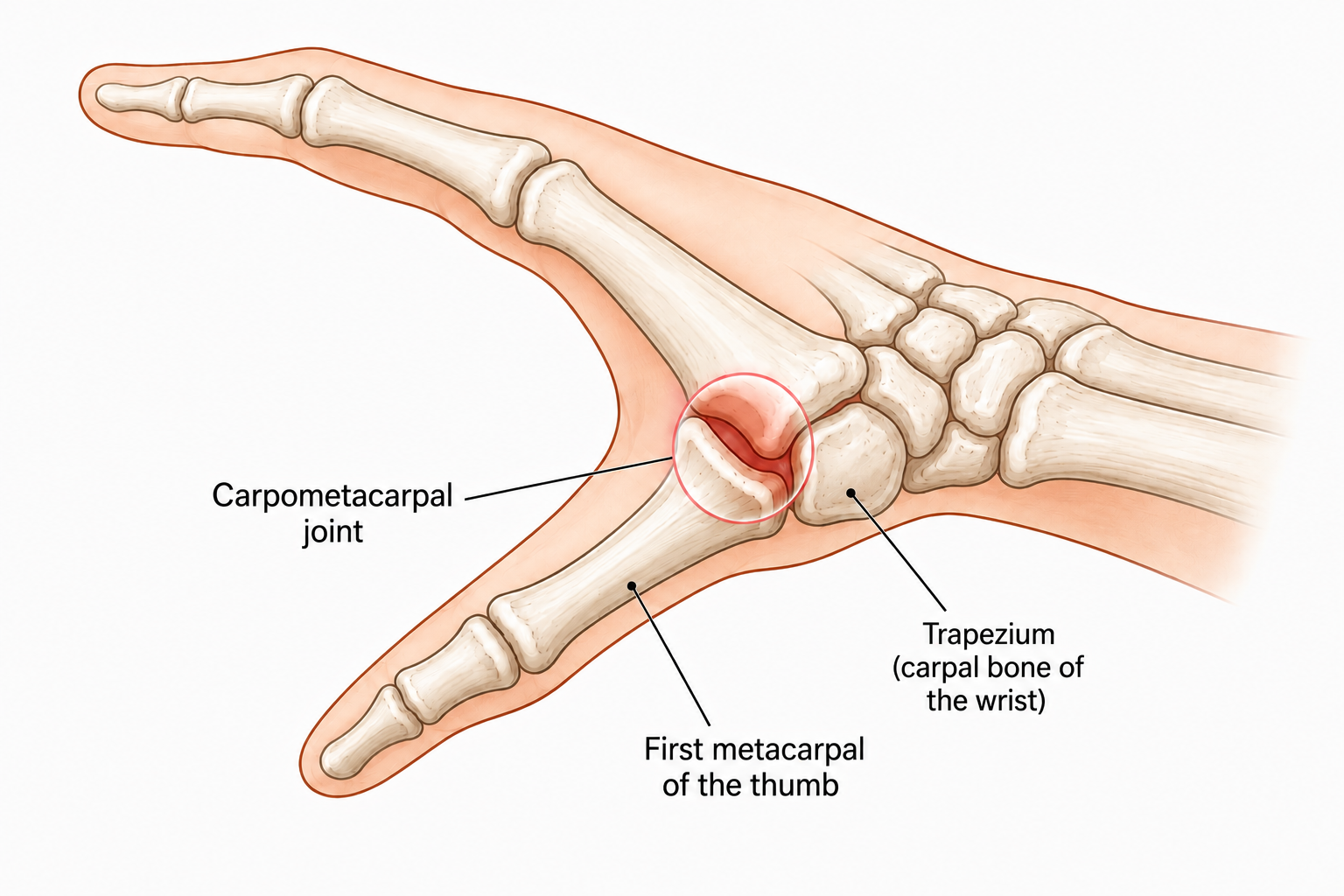
Thumb CMC Osteoarthritis involves pain, injury, or degenerative change affecting the thumb carpometacarpal joint, which may affect upper-limb movement, strength, and daily function. Symptom severity is influenced by activity load, tissue recovery capacity, and individual health.

Cause

Thumb CMC osteoarthritis develops through progressive changes to the cartilage, bone, and surrounding structures of the thumb-base joint. Age, previous joint injury, joint laxity, and anatomical or genetic factors contribute to its development. Repetitive pinching and gripping can aggravate symptoms.

Risk Factors

  • Increasing age
  • Female sex
  • Repetitive pinching and gripping
  • Thumb trauma or joint laxity

Common Symptoms

  • Thumb-base pain
  • Pain with pinching or opening jars
  • Reduced strength
  • Joint deformity

Management

Management prioritises joint protection and function. A thumb splint may reduce pain and shear force during pinch. Treatment teaches use of larger joints and the whole hand to share force, combined with first-web-space stretching and thumb-stability training. Persistent pain affecting sleep, self-care, or work warrants medical review.

Prevention

Reduce forceful pinching, opening tight lids, and carrying loads through the thumb alone; use larger handles, jar-opening aids, or two-handed techniques to spread joint load.

Book
Ask