Head & Face Conditions

Stroke

Stroke

Definition

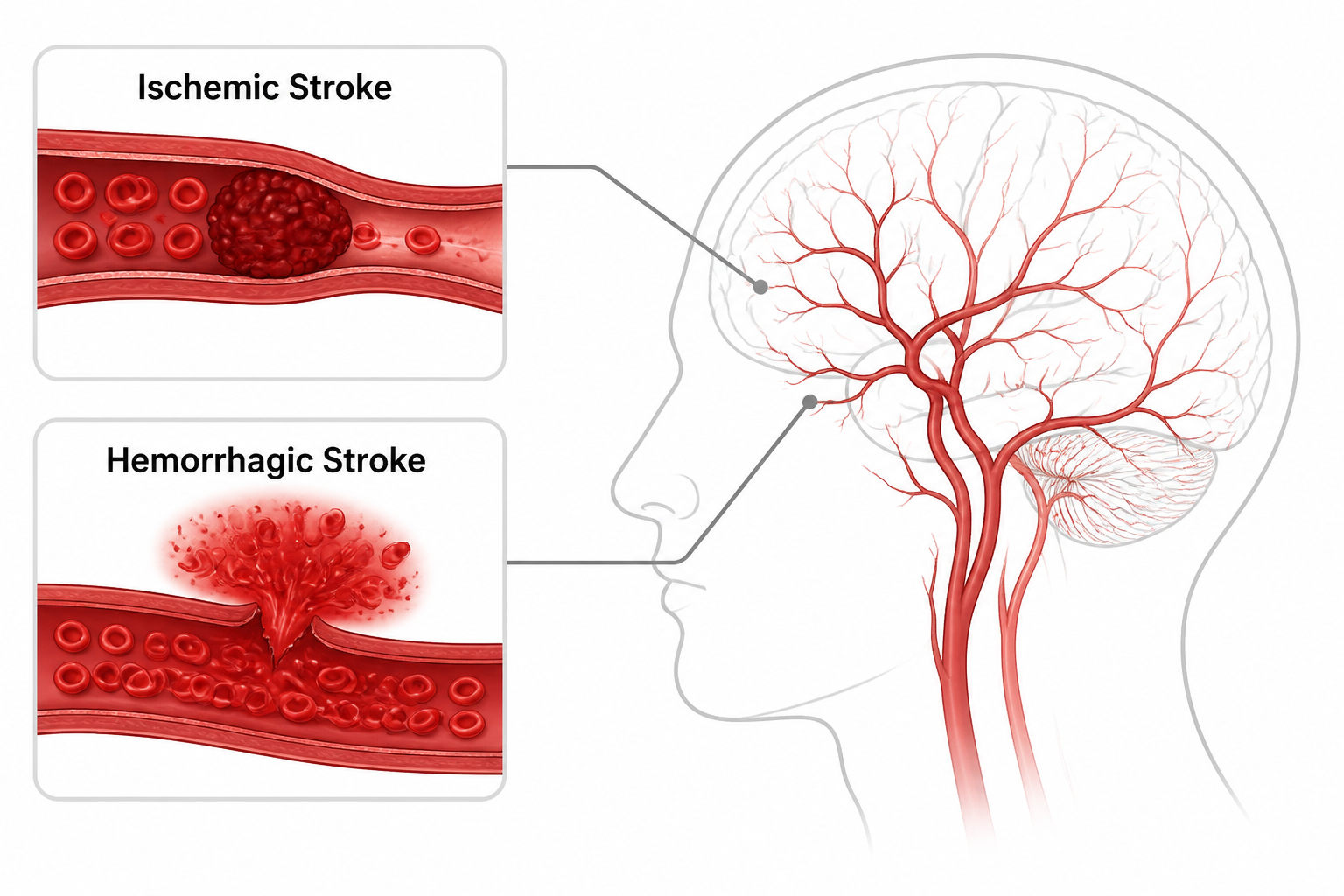
Stroke is neurological injury from sudden interruption of brain blood flow. It may be ischaemic or haemorrhagic and can affect movement, sensation, balance, vision, or speech.

Cause

Vascular risk factors damage vessels or promote clots; atrial-fibrillation clots or vessel rupture may also cause stroke.

Risk Factors

  • Advancing age
  • Hypertension, diabetes, or high cholesterol
  • Smoking and inactivity
  • Heart disease including atrial fibrillation

Common Symptoms

  • Sudden one-sided weakness or numbness
  • Slurred speech or language difficulty
  • Sudden blurred vision
  • Unsteady gait or poor balance

Management

Physiotherapy supports safe turning, sitting, transfers, standing, and walking, and teaches caregivers not to pull the affected arm. Repeated practice targets rising, stairs, and arm use; balance work, electrical stimulation, gait aids, and home safety assessment may be added.

Prevention

Maintain regular physical activity and follow an appropriate strength and balance programme. Managing blood pressure, diabetes, cholesterol, smoking, and other vascular risk factors is important for reducing the risk of another stroke. Keep the home environment safe and use prescribed walking aids where needed to reduce fall risk.
Parkinson's Disease

Parkinson's Disease

Definition

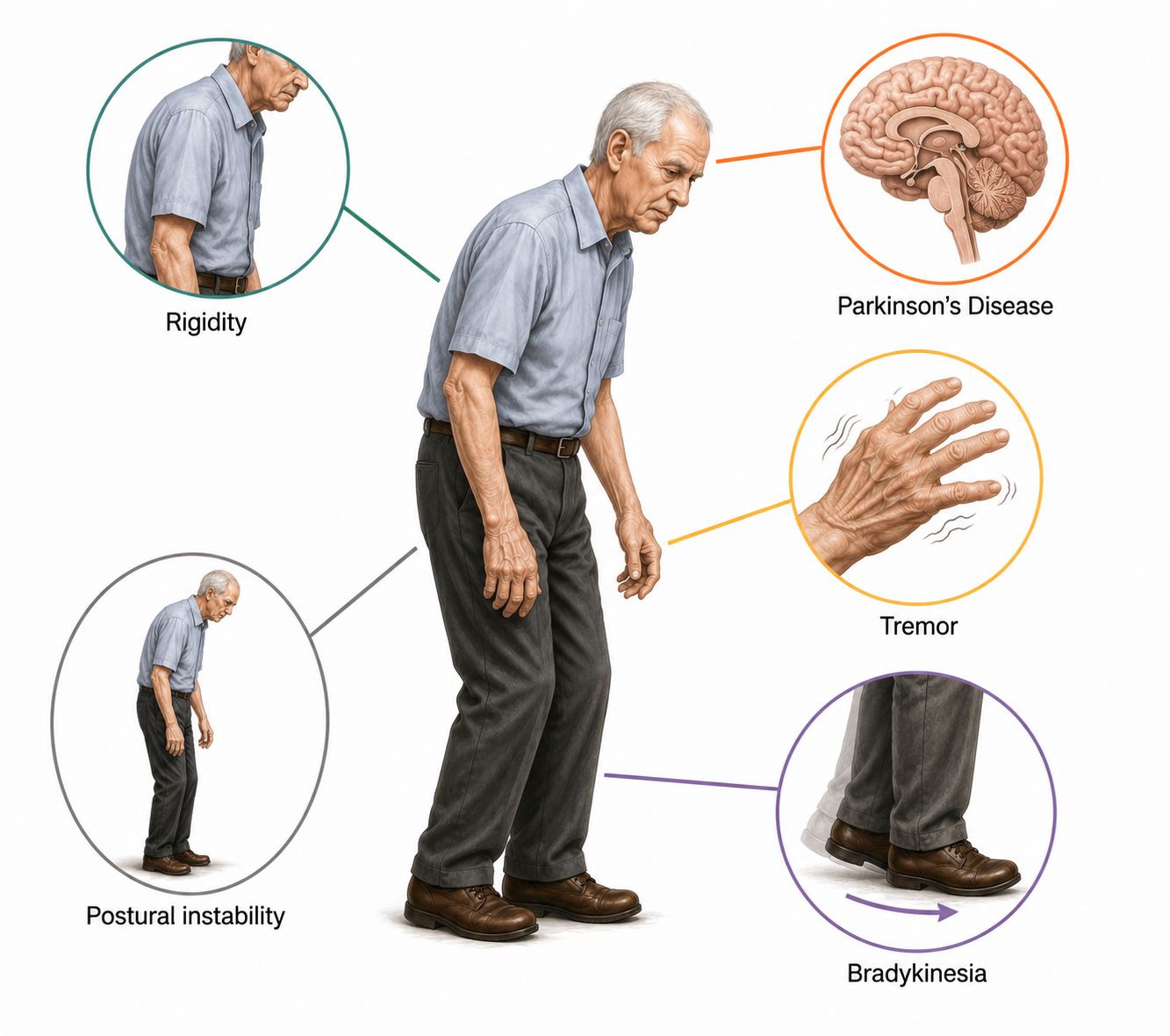
Parkinson's disease is progressive dopamine-cell loss that disrupts motor control, causing tremor, rigidity, bradykinesia, and impaired balance.

Cause

Substantia-nigra dopamine neuron loss disrupts basal-ganglia signalling; ageing, genetic, and environmental factors contribute.

Risk Factors

  • Increasing age
  • Family history or genetic factors
  • Male sex
  • Certain environmental exposures have been associated with increased risk

Common Symptoms

  • Resting tremor
  • Muscle rigidity
  • Bradykinesia
  • Postural instability and falls

Management

Physiotherapy practises large steps, arm swing, turning, rising, and stairs. Floor lines, rhythm, or verbal cues can help freezing; reactive balance, obstacle walking, and safe help-seeking after falls are practised during medication "on" periods when possible.

Prevention

Regular physical activity, strength, balance, and mobility exercise can help maintain function and reduce fall risk. Keep frequently used areas well lit and clear of hazards, take care when turning, and use appropriate support when mobility becomes more difficult.

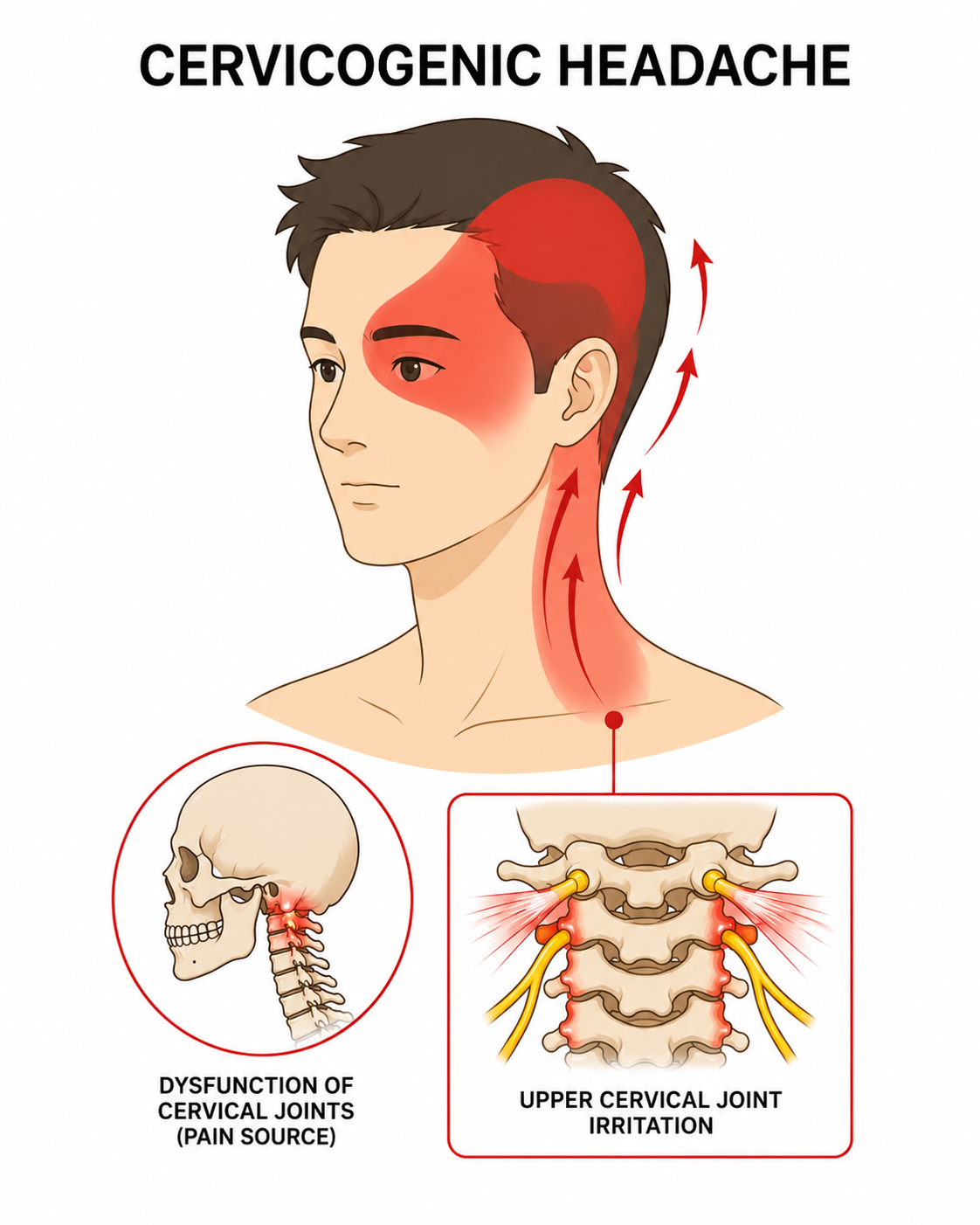
Cervicogenic Headache

Cervicogenic Headache

Definition

Cervicogenic headache arises from cervical joints, muscles, or soft tissues and refers pain from the neck to the head or face, often with upper-cervical dysfunction.

Cause

Cervicogenic headache is associated with pain arising from structures in the neck and being referred to the head. Neck movement, sustained positions, or irritation of cervical joints and surrounding tissues can influence symptoms.

Risk Factors

  • Previous neck injury or whiplash
  • Reduced or painful neck movement
  • Sustained positions that aggravate neck symptoms
  • Recurrent neck pain

Common Symptoms

  • Unilateral pain radiating from neck
  • Pain with neck movement
  • Reduced neck movement
  • Neck tenderness

Management

After appropriate screening, physiotherapy may include neck and upper-back mobility, strengthening, movement-control exercises, and manual therapy where suitable. Daily activities and sustained positions that consistently aggravate symptoms can also be identified and adjusted.

Prevention

Maintain regular neck and upper-body movement and avoid staying in positions that consistently aggravate symptoms for prolonged periods. Continue appropriate strength and mobility exercises and vary sustained work or screen positions where practical. Seek urgent medical assessment for a sudden severe headache or new neurological symptoms.

Temporomandibular Disorder

Temporomandibular Disorder

Definition

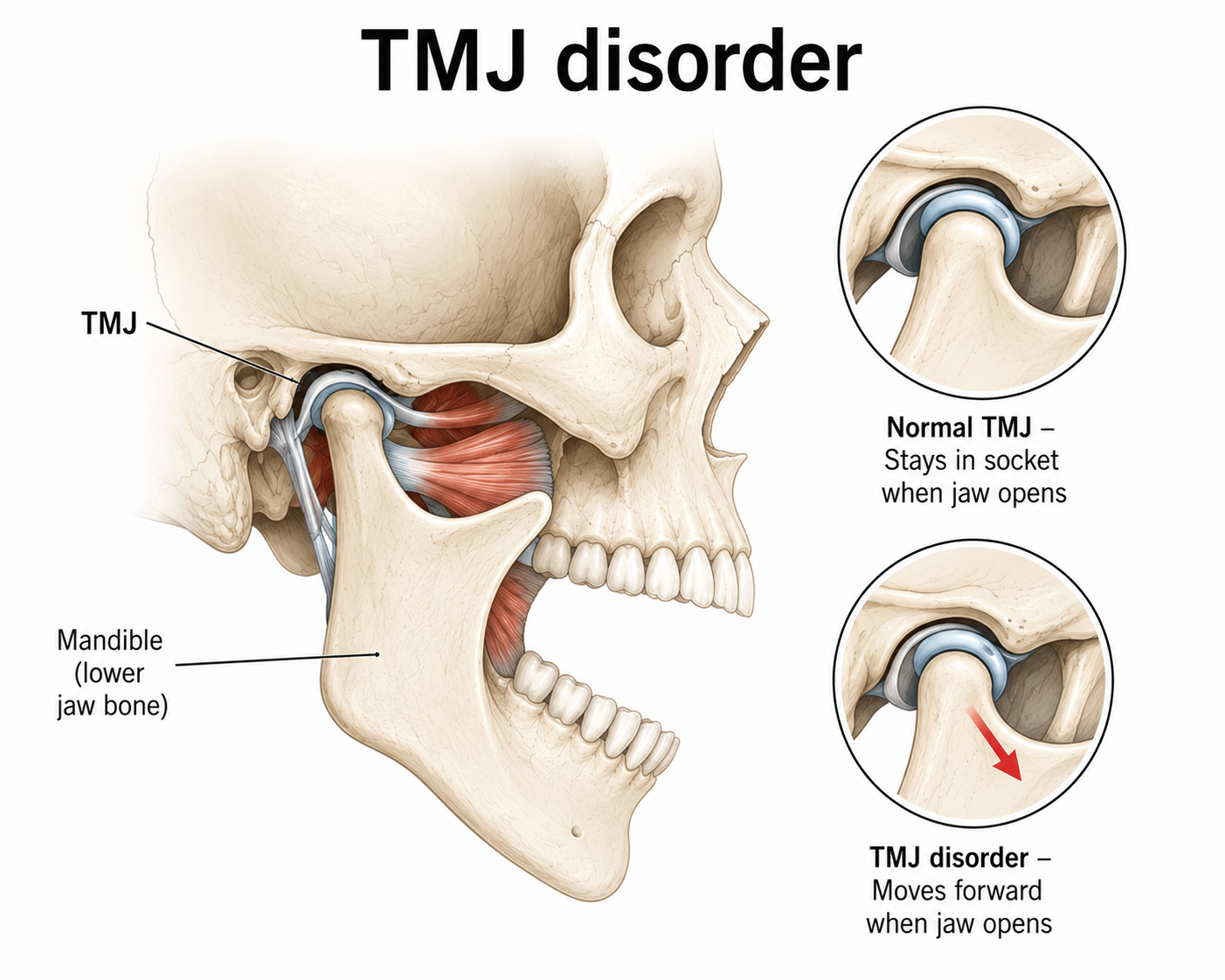
Temporomandibular disorder is pain or movement dysfunction of the jaw joint and chewing muscles, causing pain, noise, or restricted movement.

Cause

Temporomandibular disorders can arise from different factors affecting the jaw joint or chewing muscles. Jaw injury, joint changes, and repeated clenching or grinding may contribute to symptoms, while stress can influence muscle tension and pain in some people.

Risk Factors

  • Repeated clenching or grinding
  • Previous jaw or facial trauma
  • Jaw-joint or chewing-muscle problems
  • Persistent stress or pain-related muscle tension

Common Symptoms

  • Jaw or chewing-muscle pain
  • Clicking or grating
  • Limited opening or deviation
  • Ear or temple pain

Management

Physiotherapy teaches a relaxed jaw position: lips lightly together and teeth apart. The therapist may release tight chewing muscles and teach controlled opening, side-to-side movement, and posture exercises to restore movement without worsening pain.

Prevention

Avoid prolonged unnecessary clenching and habits such as biting pens or nails or excessive gum chewing. During painful periods, modify very hard or repeatedly chewy foods and use relaxation strategies when jaw tension is associated with stress.

Benign Paroxysmal Positional Vertigo (BPPV)

Benign Paroxysmal Positional Vertigo (BPPV)

Definition

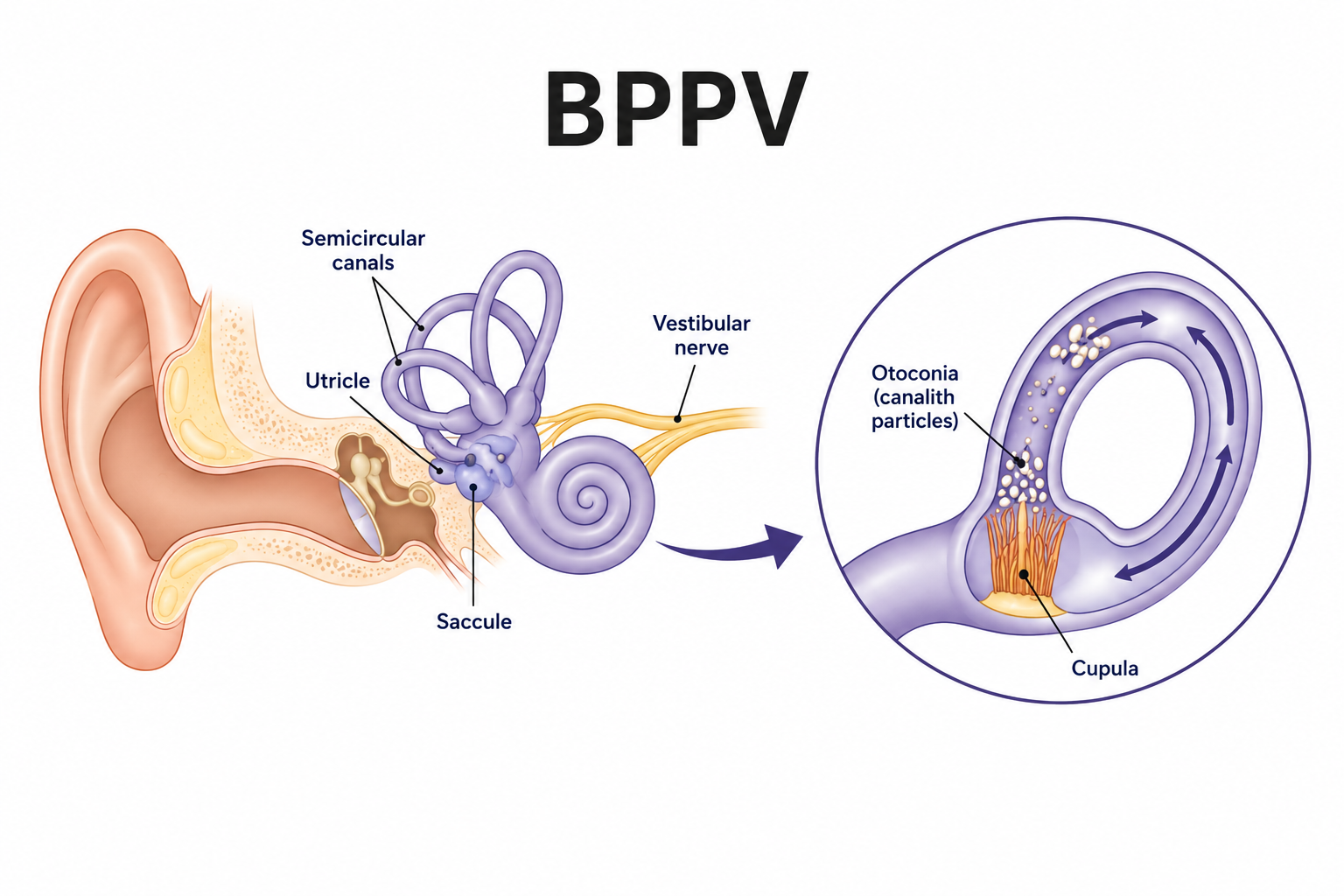
BPPV occurs when inner-ear crystals enter a semicircular canal, causing brief intense spinning vertigo with head-position changes.

Cause

Ageing, trauma, or inner-ear infection can dislodge otoconia and create false balance signals.

Risk Factors

  • Advancing age
  • Previous head trauma
  • Inner-ear infection or vestibular neuritis
  • Prolonged bed rest

Common Symptoms

  • Positional spinning vertigo
  • Episodes lasting seconds to one minute
  • Triggered by rolling or looking up
  • Nausea or vomiting

Management

The physiotherapist uses position tests to identify the affected ear and canal, then performs repositioning. Brief vertigo may occur; gaze-stability, walking, and balance exercises can address residual unsteadiness and reduce falls.

Prevention

BPPV cannot reliably be prevented and can recur after successful treatment. If dizziness is present, move carefully during position changes and keep the home environment safe to reduce fall risk. Recurrent positional vertigo should be reassessed so that appropriate repositioning can be performed.

Book
Ask