Osteoporosis
Definition
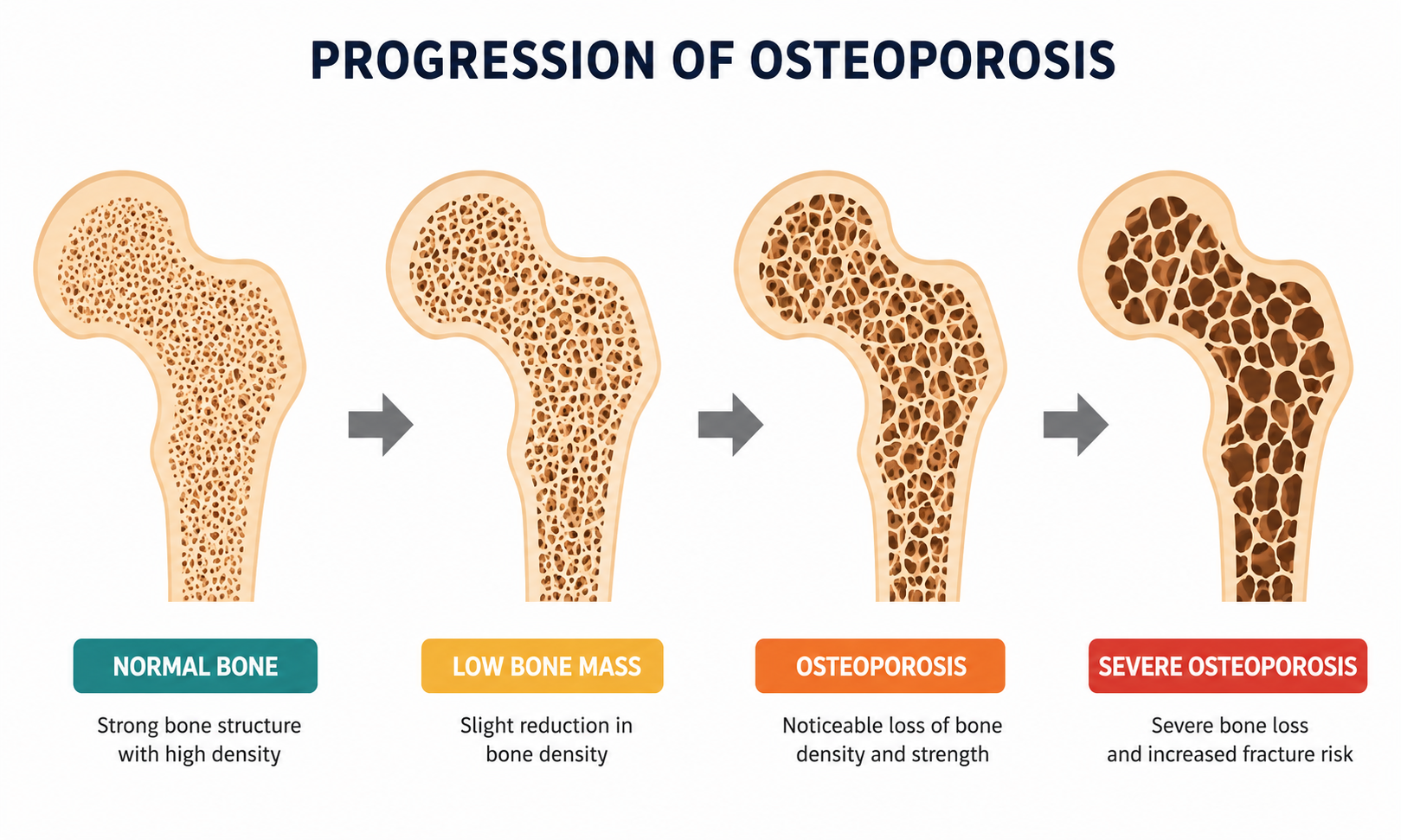
Osteoporosis is a condition in which reduced bone strength increases the risk of fractures. It develops as bone density and structure change over time and often causes no symptoms until a fracture occurs.
Cause
Bone loss occurs when resorption by osteoclasts persistently outpaces formation by osteoblasts, commonly linked to declining oestrogen after menopause and age-related slowing of bone metabolism.
Risk Factors
- Postmenopausal women and older adults
- Long-term inadequate calcium and vitamin D intake
- Lack of weight-bearing exercise or prolonged immobility
- Long-term corticosteroid use
Common Symptoms
- Back pain from vertebral compression fractures
- Gradual height loss
- Stooped posture or kyphosis
- Fractures from minor falls or impact
Management
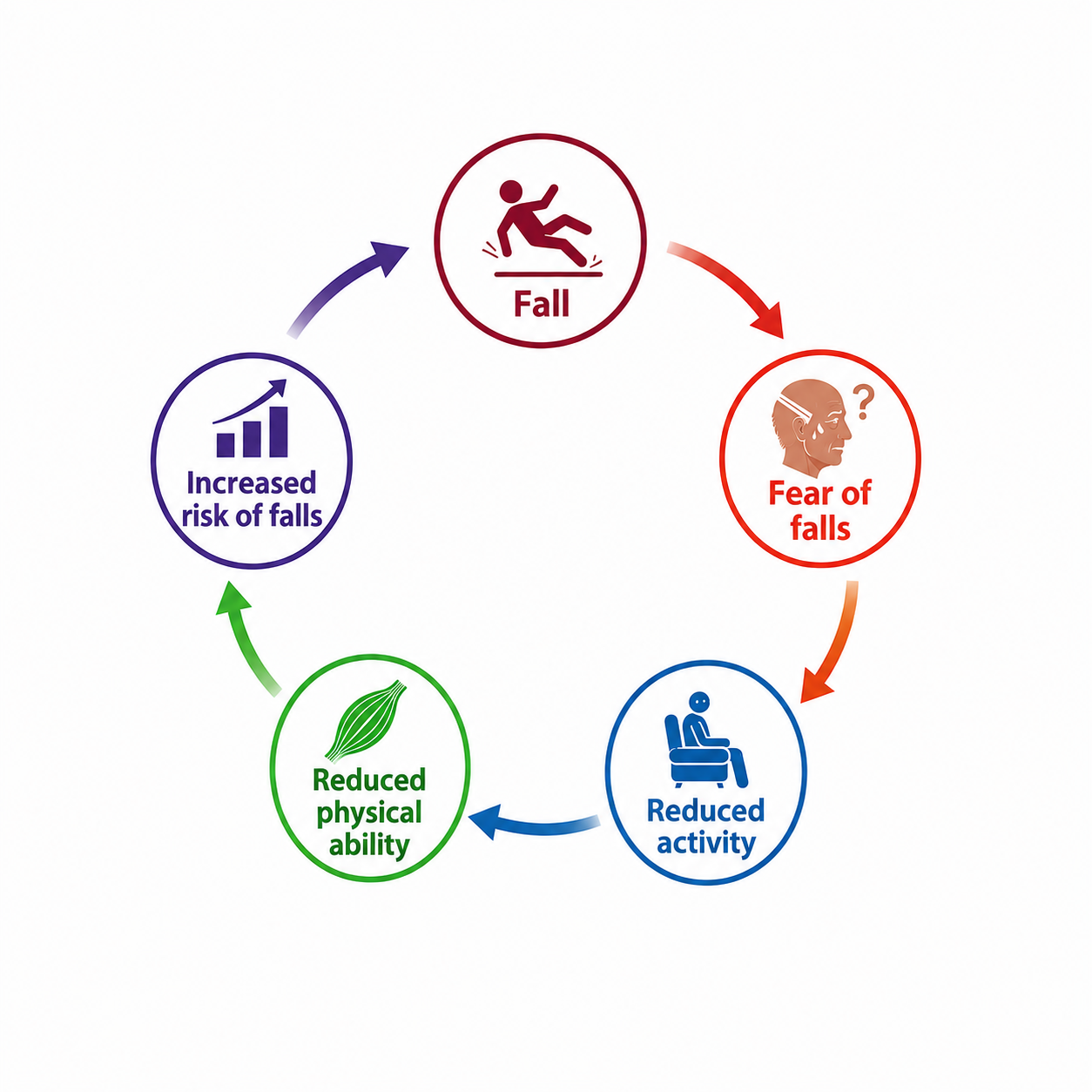
Physiotherapy focuses on appropriately prescribed weight-bearing and resistance exercise to support bone strength and physical function, together with balance and gait training to reduce fall risk. Exercise selection and intensity are adjusted according to fracture risk and individual ability.
Prevention
Regular weight-bearing and resistance exercise, adequate calcium and vitamin D intake, avoiding smoking, and limiting excessive alcohol intake can support bone health and help reduce fracture risk.